
2.1 Causes of Uneven Development
-
2.1 Causes of Uneven Development
-

 Ich kann ...
- ... Ursachen für ungleiche Entwicklung bzw. "Unterentwicklung" nennen und erklären.
- ... die Ursachen verschiedenen Katheogrien zuordnen und in einer Concept Map darstellen.
- ... den "Teufelskreis der Armut" erklären.
- ... anhand des Beispiels einen Vicious Cycle zu einem der Themen Analphabetismus, Geschlechtergerechtigkeit oder Unterernährung erstellen und der Klasse präsentieren.
- ... komplexe Zusammenhänge in einer Grafik visualisieren.
- ... konstruktiv im Team an einem kollaborativen Dokument arbeiten und dabei die Ideen meiner Gruppenmitglieder respektieren und integrieren.
-
Intro: Looking at causes for uneven development



 1. Click through the slide show together and write down keywords for each picture an your gallery worksheet. Compare your ideas.
fotos: wikimedia
If you are out of ideas, try the drag and drop activity to get some inspiration.
2. Now click through the slide show a second time and write down a title for each picture. Compare your ideas in class and discuss to what extent the pictures represent causes of uneven development.
-
Activity 1: Linking Causes of Uneven Development



Uneven development across the globe is influenced by a variety of factors shaping economic and social disparities between regions and countries. In the following you will learn about these factors, and how they are interconnected.
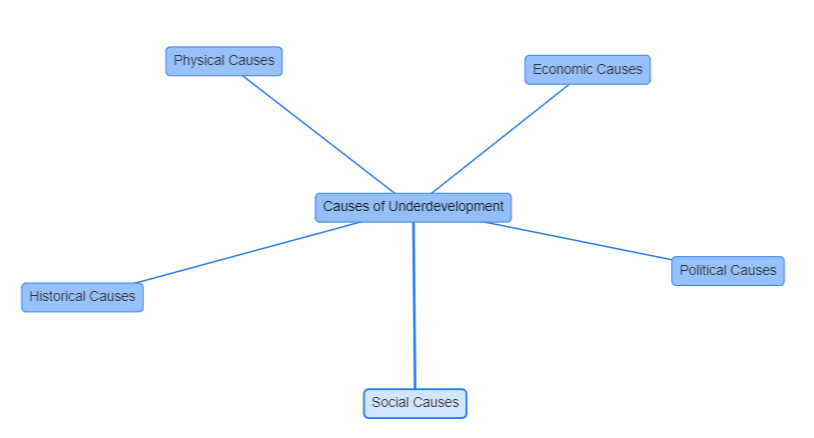

1. Choose one category and read the fact sheet.
A economic causes, B historical causes, C physical causes, E political causes or F social causes
A economic causes, B historical causes, C physical causes, E political causes or F social causes
2. Prepare a one-minute speech about the issues addressed and leave an audio.

3. Meet with students from the other groups and exchange facts. Together complete the mindmap.
Visualize connections between concepts and topics in your mindmap. Mark the relationships between the concepts with arrows and words. Explain the connections you have made to other students. If you need help with the method, have a look at the example of the concept map on development and read the instructions.
-
Task: Trapped in the vicious cycle
Many people in the Global South are unable to escape poverty through their own efforts. They are trapped in a cycle of poverty.
This cycle is also known as generational poverty, meaning that at least two generations of a family are living below the
poverty line. The main reason for this is a lack of capital formation or wealth building that becomes generational.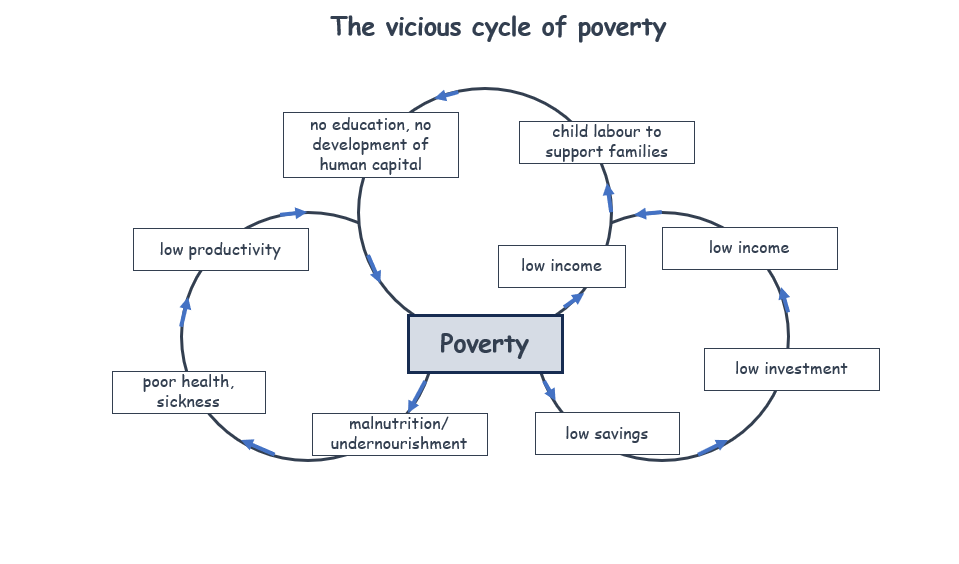




1. Look at the image and describe the relationships. Check here whether you can assign the elements of the cycle.
2. Interpret the vicious cycle of poverty. Leave an audio for your teacher here.


"It is possible to break out of this vicious cycle, but only with the help of external factors." Discuss the statement with a partner and think of possible external factors which could break the cycle of poverty.
In teams make your own suggestion for a vicious cycle in which you place illiteracy, gender inequality or malnutrition in the center.

Share your ideas in class.
 Leave your vicious cycle in the student folder.
-