
2.2 Development Theories & Strategies
-
2.2 Development Theories & Strategies
-

 Ich kann ...
- ... die beiden wichtigsten Entwicklungstheorien (Modernization - und Dependency Theory) der 60er Jahre kurz erläutern und ihre zentralen Ideen und Ziele darstellen.
- ... die Hauptunterschiede zwischen der Modernization Theory und der Dependency Theory identifizieren und erklären.
- ... Vor- und Nachteile der beiden Theorien formulieren.
- ... reflektieren, wie diese Theorien in der heutigen Entwicklungspolitik Anwendung finden oder relevant sind.
- ... verschiedene Strategien der Entwicklungspolitik nennen und darlegen, welche Elemente ich nützlich finde um aktuellen Problemen in "Entwicklungsländern" zu begegnen.
- ... erläutern, wie die Fragmenting Development Theory zur Erklärung heutiger Entwicklungsunterschiede beiträgt.
- ... argumentieren, dass westliche Industrieländer nicht als Vorbild für Entwicklungsländer dienen können, da sie einen übermäßigen ökologischen Fußabdruck hinterlassen.
- ... die drei Dimensionen der Nachhaltigkeit nenne und kann für jede Dimension Beispiele anführen.
- ... erklären, was die Sustainable Development Goals (SDGs) sind und kann recherchieren, welche Fortschritte bereits erzielt wurden.
- ... eine Checkliste mit Handlungsempfehlungen erstellen, die zur Umsetzung der SDGs beiträgt.
- ... konstruktiv in der Gruppe an einem kollaborativen Dokument arbeiten oder eine Präsentation vervollständigen.
- ... Vor- und Nachteile zu einem bestimmten Thema herausarbeiten.
- ... gelernte Theorien und Strategien auf deren Anwendung überprüfen.
-
Intro: Development according to the Western Model?




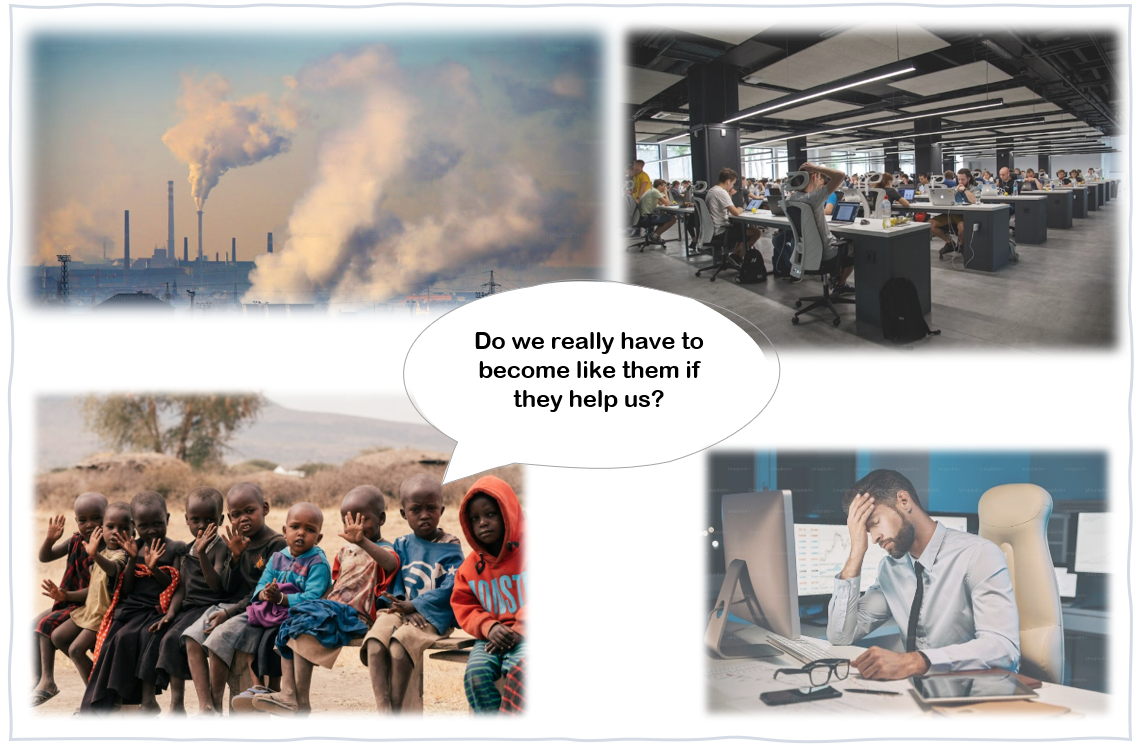
fotos: unsplash+
- Describe the image.
- Discuss with a partner: What criticism is being expressed here? To what extent does the picture influence your current idea of development?
-
Activity 1: Theories and strategies for one world
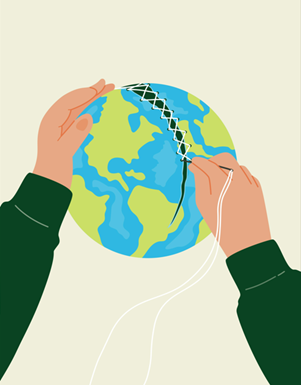
Between the end of the Second World War and the 1990s, many colonies in Africa and Asia gained independence. The vast majority of these states still struggle with poverty and inadequate economic and social structures. Overcoming these problems requires a clear analysis of the causes, which in turn can become a promising strategy. On this basis, two opposing development theories emerged in the 1960s: modernisation theory and dependency theory.
unsplash+




a) Read the text about one theory of development and complete the result sheet.
GROUP A: Modernisation Theory
GROUP B: Dependency Theory

b) Working in pairs, explain the theories to each other and complete the corresponding table. Add the bold terms in the texts to the glossary.
Compare and evaluate both theories. Discuss: ‘Why were development theories doomed to failure?’

In the course of the 1980s, the persistence of poverty and development gaps in large parts of the world led to a crisis of the two main theories of development. The failure of the catch-up strategy and the dissociation strategy, and the lessons learned from them, led to a turnaround in development policy. The satisfaction of basic needs is now the primary goal of development projects that are carried out directly among the affected population. The new development policy sought not only to eradicate poverty but also to adapt development assistance to the local conditions of the country (adapted development). In addition, the top-down approach was replaced by a bottom-up principle in which people themselves are involved in improving their immediate living conditions and are encouraged to take the initiative (help for self-help). In the 1980s, it was recognised that an economic system based solely on growth would exceed the long-term sustainability of our planet. At the 1992 Conference on Environment and Development in Rio de Janeiro, development and environmental protection were brought together in a single strategy for the first time (strategy of sustainable development).
c) Summarize the central aspects of one development strategy. In groups, complete the collaborative document.

c) Discuss in your group which elements of each theory you find useful to meet problems of uneven development.
Test your knowlege here.
Test your knowlege here.
-
Activity 2: The theory of fragmenting development
M1 Social contrasts in megacities: modern buildings in the background and an illegal slum in the foreground
foto: unsplash+

1. Discuss together in class what the picture tells you about current development trends.

2. Read the text about the theory of fragmenting development.
 Sum up the text in your own words.
 Explain the following statement: "Globalisation does not foster development evenly."
 Contextualise the theory in the history of development theories.
Record your answer.
3. Do you know of any other places in the world where the phenomenon of fragmenting development can be seen? In small groups, search for images that represent this fragmentation and post them on one slide of the collaborative presentation.
-
Activity 3: Footprints of the Future - Who's Really Developing?




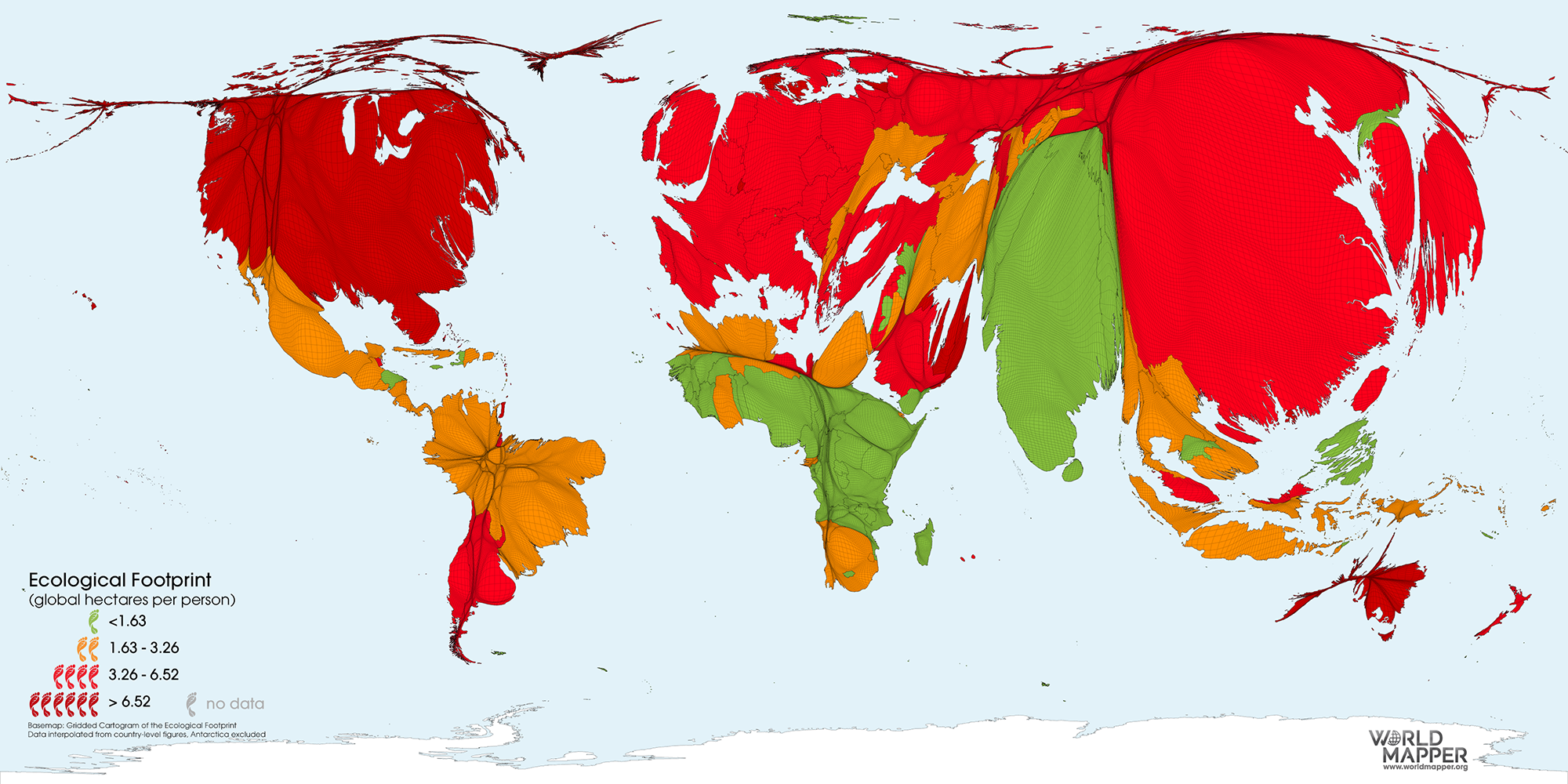
1) Look at the Ecological Footprint of Consumption map. Describe what the map shows and identify the main messages.
The three Spheres of Sustainability
With the Brundtland Report (1987) and the UN Conference on Environment and Development (1992), the development debate shifted to focus on the scarcity of the Earth's natural resources and the limits of the global ecosystem. This marked the emergence of a new understanding of development. The World Commission on Environment and Development convened for the first time in 1983, establishing the foundation for the 1992 Earth Summit in Rio de Janeiro. In 1987, the Commission published the influential Brundtland Report, which introduced the most widely recognized definition of sustainability:
"Sustainable development is development that meets the needs of the present without compromising the ability of future generations to meet their own needs".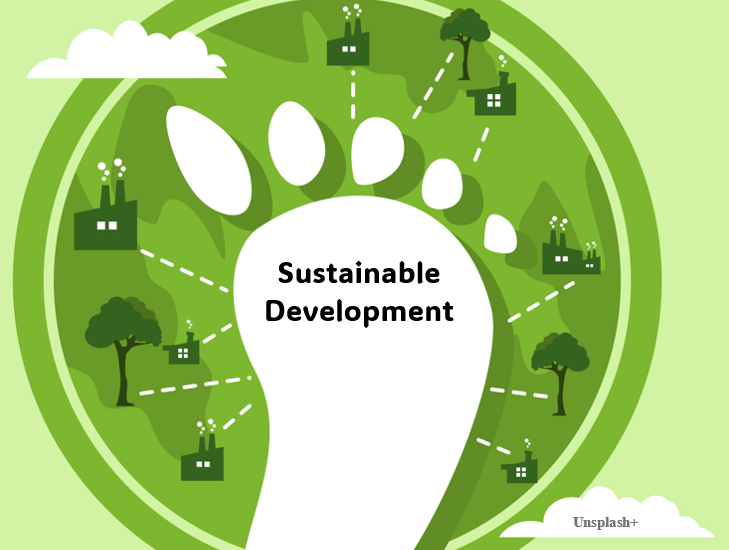
The 2005 World Summit for Social Development defined 17 goals for sustainable development, including economic development, social development and environmental protection. This concept can be illustrated by three overlapping ellipses, indicating that the three pillars of sustainability are interdependent and that in the long term cannot exist without the others. These principles are also informally referred to as profit, people and planet.

Find examples for each sphere. What could sustainable action in this field practically mean? Work with the interactive activity.
Find examples for each sphere and complete the work sheet. Then compare with a partner.
-
Activity 4: Sustainable Development Goals (SDG´s)
The Sustainable Development Goals (SDGs) were adopted by the United Nations in 2015 as a universal call to action to end poverty, protect the planet, and ensure that by 2030 all people enjoy peace and prosperity.
Source: Sustainable Development Goals | United Nations Development Programme (undp.org)




- Take a look at the 17 Global Goals and find out what lies behind them. Then take the quiz.
 Additionally, you can watch a YouTube video by the UN. The United Nations' website contains facts and information about the progress that has already been made.

A global plan, a blueprint for a sustainable world? That sounds too good to be true. Discuss in class whether you find the goals realistic or utopian.
-
Fun extra activity: Rap the Goals
Check out this video about the 17 SDGs.


 Prepare a text for a short song about "your" goal and record it here. Have fun!
-
Task: Take action! - The couch potato guide




Even from your couch you can help to achieve the Sustainable Development Goals. Check out how you can help by doing simple things.
1. Prepare a checklist with things you can do from your couch, your home or your neighbourhood to support the SDGs.
Here you find an example with some ideas.
2. Exchange the checklists in your class. Tick off the steps you have already taken.


Discuss how much impact these actions might have on global development. Are they just a drop in the ocean? Isn't the idea that you can change the world from the comfort of your sofa misleading?
-
Task: Making SDGs visible and become an influencer
Now it is time to act! You will take part in a project called Peer-to-peer: young people explain the SDGs. (sdg-education)


Before you get started, you need to choose one SDG. The following quiz can help you to decide on which one you should focus on.
Now you can get started and take action. Take a look at the instructions for your assignment or use the hotspot image to guide you through your project.

 Leave your videos in the student folder.
 As a class, you can decide whether you want to upload your videos as a story to your school Instagram account.
-
